
Firewood Facts
Solar Energy in a Stick!
Carbon Sequestration

No need to feel guilty
Firewood The Environmental Fuel
Solar Energy in a Stick!
Trees use photosynthesis to capture the sun’s energy. Trees also absorb carbon dioxide from the atmosphere and use the solar energy captured to convert carbon dioxide and water into organic compounds such as cellulose to grow the tree. Oxygen is released to the atmosphere as a by-product of photosynthesis. In photovoltaic cells solar energy is directly converted into electricity, which can be fed into the grid or stored in batteries. In the leaves of trees solar energy is effectively stored in the organic compounds. When deposited into the trunk, roots and branches of a tree as wood this energy will be stored until the wood rots away, unless it is used as fuel.
Throughout our history mankind has used the stored solar energy in wood for heating, cooking and light. It is probably the historic use of fire to ward off the cold – and predators – that gives us all an ingrained feeling of comfort when we are close to a wood fire. It is only in comparatively recent times that man has started using other forms of stored energy called fossil fuels, ie. coal, gas and oil, to replace the use of wood. As we now know, the release of carbon dioxide from burning these previously inaccessible forms of hydrocarbons is changing the atmospheric concentration of carbon dioxide, which is thought to be causing an accelerated rate of change in the earth’s climate. Obviously, the more use we can make of the stored solar energy contained in wood and other bioenergy sources, the less we need to use fossil fuels. As Patrick Moore, co-founder of Greenpeace stated in 2006; “One of the best ways to address climate change is to use more wood, not less. Wood is simply the most abundant, biodegradable and reusable material on the planet”
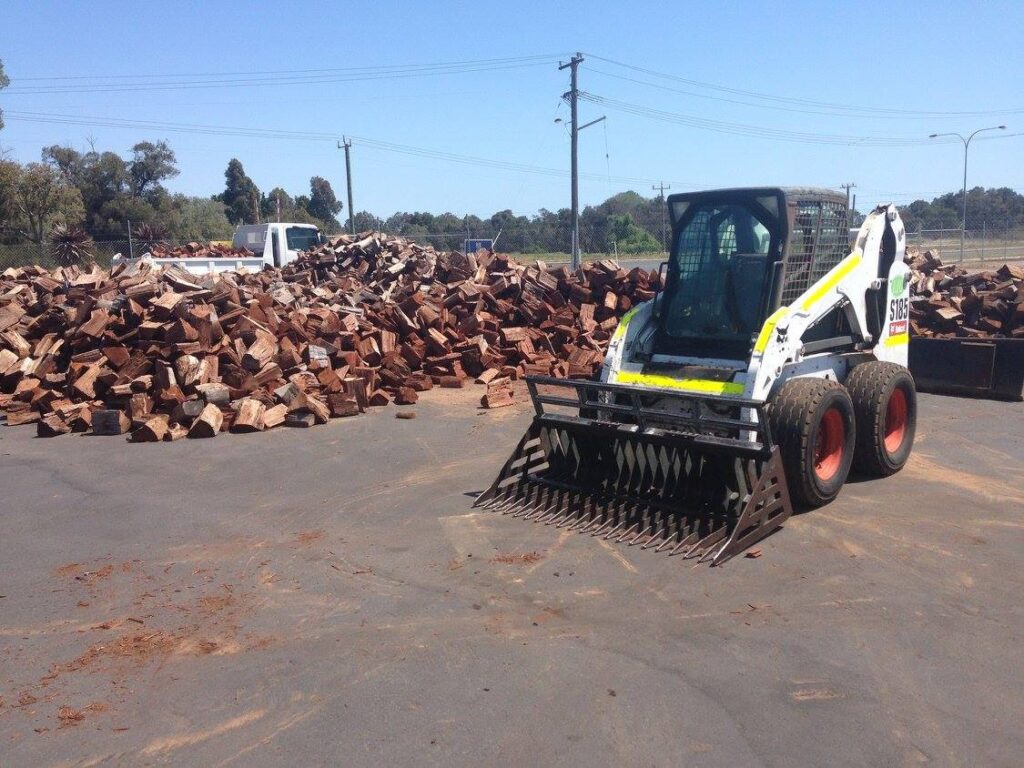
Firewood is not often recognised as “green” energy, probably because it comes from trees. But, unlike other sources of “green” energy, firewood does not need major capital investment or infrastructure. Every tonne of dry firewood contains approximately 20,000 Megajoules of stored energy. To understand how this stored energy compares to other forms of “green” energy, such as wind power generation, you need to convert the electricity produced from Megawatt hours into Megajoules. One Megawatt Hour equals 3,600 Megajoules. This means that a typical 660 kW wind turbine will generate around the same amount of energy in one year as that contained in 315 tonnes of firewood. Recent estimates (Driscoll et al 2000) place Australia’s annual firewood consumption at around 4,000,000 tonnes. This is equivalent to the annual output of nearly 13,000 wind turbines or six large (550 MW) coal fired power stations.
The Climate Change Benefits of Firewood
A study of the greenhouse gas emissions of firewood was carried out by the CSIRO in 2003 for the Australian Greenhouse Office. The report from this study Life Cycle Assessment of Greenhouse Gas Emissions from Domestic Woodheating shows that firewood can release less carbon dioxide than all other sources of heat energy. In 2011 this study was updated to include the non-CO2 greenhouse gases, methane and carbon monoxide. This updated study found that the inclusion of these gases made little difference to the original findings. As stated in the 2011 report “What is the difference between emissions due to firewood collection for home heating and those which would have occurred anyway if the wood was left in the field to decompose or be burnt?” In fact firewood from plantations is greenhouse positive due to the carbon that is sequestered in the tree’s root mass. In other words the tree absorbs more atmospheric carbon dioxide than is released when the wood from the tree’s trunk is burnt. The reason that sustainable firewood is so good for the environment is that all of the carbon that is released during combustion is reabsorbed by trees as they grow. The only increase in atmospheric carbon dioxide comes from the fossil fuels used to process and transport the wood. It is worth noting that even “green” alternative energy generators such as wind farms, hydro stations and solar collectors create a lot of carbon pollution during manufacture and construction.
Protecting Biodiversity
By purchasing your wood from members of the FAA you can be confident that the wood has been harvested legally from sustainable sources and that biodiversity and threatened species have been protected. This is because compliance with the Voluntary Code of Practice for Firewood Merchants is a mandatory condition of membership in the FAA. The Code of Practice was developed by an Inter-Government Taskforce made up of representatives from the environment departments of all States, as well as the federal environment Department. Laws controlling the harvesting of firewood vary considerably from state to state, but all of them are designed to protect biodiversity. The federal Environment Protection and Biodiversity Control Act has an overarching role in the protection of threatened or vulnerable species habitat. In some states the harvesting of dead trees is exempt from native vegetation protection controls.
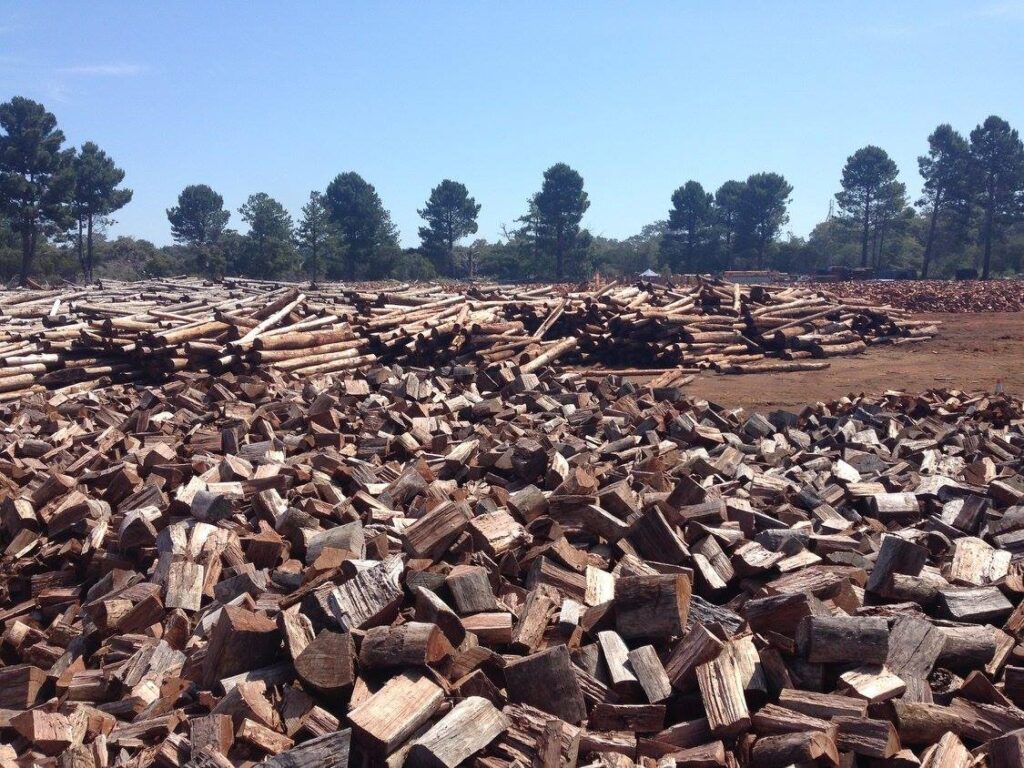
Carbon Sequestration
The CRC for Greenhouse Accounting and Forest and Wood Products Australia (FWPA) have published a good summary of the role of firewood and other forest products in the carbon cycle called Forests, Wood and Australia’s Carbon Balance.
A short report titled Carbon Storage and Climate Change has been published by Vision 2020. It focuses on the carbon sequestration values of managed forests and plantations. The benefit of utilising residues and salvage from forestry operations as firewood is noted in the report as: “The use of wood waste in bio-fuels and for bio-energy is a further mechanism whereby plantations and native forest residues can be used to lower greenhouse gas emissions, by substituting for the use of fossil fuels”
No need to feel guilty
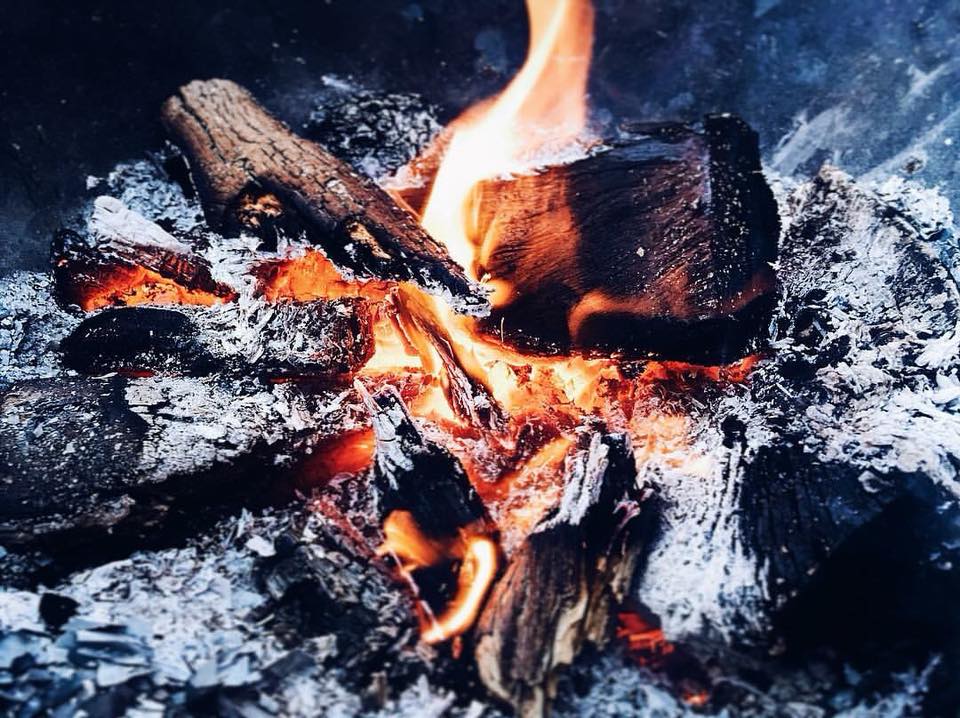
So, if you love a wood fire, whether for warmth, flavoursome food, or its’ mood changing ambience, relax – because you are also doing the best you can for the environment.
FAQs
Although some local councils have placed restrictions on wood heater installations in recent years it is extremely unlikely that this will be widespread. The Penrith council proposed a state wide ban for NSW a couple of years ago but this was rejected by the Local Government & Shires Association. Wood heaters are in fact becoming more popular as energy and utility costs continue to rise. As long as wood heater users operate their heaters responsibly and do not emit large amounts of smoke, councils will have no reason to ban wood heaters.
Water is present in all living trees as sap. Depending on the species there can be more water in wood by weight than there is wood fibre. Moisture content in wood is expressed as the percentage of water by weight compared to the weight of oven dried wood. If the weight of water in a piece of wood is the same as the oven dried weight of the wood then the moisture content is 100%. For wood to burn well it needs to be less than 25%, preferably between 12% and 20%. Except in very dry climates 12% is as low as wood moisture content will get.
The best way to tell if wood is dry enough to burn is to test it with an electrical resistance moisture meter. FAA members will have one of these. Otherwise you can usually pick dry wood from green by its weight, it will feel comparatively heavy. Or you can split a piece in half and see if the middle is a lot darker than the outside. The surface of freshly split wood will also feel cool to the touch if it is green due to the water evaporating. As a rough rule of thumb it will take about 6-12 months for green wood to get below 25% if it has been cross-cut into 300 mm rounds (this depends on the diameter of the log and the initial moisture content).
The answer to this question is definitely no. In some parts of the world and in earlier times mankind has totally cleared the landscape of trees. In Australia, as in most developed countries, the area under forests is now actually increasing. Human activities will undoubtedly change the nature and type of forest, but most governments now recognise the value of this renewable resource. On private land plantations targeted to produce firewood are increasing. For the time being though, the last 14 years of drought have resulted in an enormous number of trees dying in the lower rainfall regions. This will provide a secure supply of quality firewood for many years. Every year more trees die and are replaced with new ones. The recent floods will create an ideal situation for germination of River Red Gums, these will be a source of potential firewood in 50-100 years as they too die.
The rail track environment makes it certain that all sleepers will be contaminated to some extent by grease, oil, herbicides and heavy metals. The fumes given off when these products are heated can be toxic. So it is best to avoid them. Some old sleepers may even contain deadly asbestos fibres from the brakes that were in use until mid 1980’s. A further risk is from small stones which become embedded in the sleepers. These can explode in the heat of a fire.
The rail track environment makes it certain that all sleepers will be contaminated to some extent by grease, oil, herbicides and heavy metals. The fumes given off when these products are heated can be toxic. So it is best to avoid them. Some old sleepers may even contain deadly asbestos fibres from the brakes that were in use until mid 1980’s. A further risk is from small stones which become embedded in the sleepers. These can explode in the heat of a fire.
Smoke is caused by the incomplete combustion of gasses given off when wood is burnt. The most common cause for this is incorrect operation of a slow combustion heater. If the air flow to the fire is closed off before the fire has reached correct operating temperature, the fire will smoke. The air vent to the fire needs to be left open for at least 15 minutes after wood is added to ensure the fire is hot enough to fully combust the gasses. This is a common problem and easy to fix. Smoke can also be caused by burning green wood or by a blocked chimney which restricts air flow. Both have the effect of cooling the fire below the correct temperature. If a fire is operating properly, you should not see any smoke from the chimney after the initial warm up period.
As long as you have purchased your wood from sustainable sources, you are actually helping the environment by heating your home with wood instead of gas or electricity. Wood is renewable bioenergy. It is recommended that environmentally aware wood users either buy their wood from FAA members or collect it from permitted areas. Collecting wood from roadsides and reserves can remove the protection it affords some wildlife, exposing it to predators such as feral cats and foxes. A CSIRO study in 2003 showed that firewood is virtually greenhouse neutral and is a useful way to reduce the carbon pollution from gas and coal energy use.
The Natural Resource Management Ministerial Council’s Firewood Taskforce has defined seven environmentally acceptable sources for sustainable firewood:
- Logging residues from sustainably managed forests and plantations.
- Residue or by-product from sawmilling or other wood processing operations supplied by sustainably managed forests and plantations.
- Wood collected from forest or woodland under government authorisation.
- Wood collected on private property under formal management plans or environmental guidelines.
- Wood from agroforestry, planted shelterbelts, planted windbreaks or waste timber.
- Salvage of waste timber from approved harvesting on private or public land.
- Recycled or waste timber from tree lopping, building demolition or urban salvage.
Firewood from any of these seven sources is accepted as complying with the Code of Practice.
Both methods are legal and are covered by the National Measurement Act. To find out more about the laws of selling firewood go to the National Measurement Institute’s web site. www.measurement.gov.au. Because all dry wood contains almost the same amount of energy per kilogram, buying by weight is probably safest. You will be paying for the energy you actually get, much the same as with gas or electricity, but you will also be paying for any water in the wood as well. The moisture content of “dry” firewood should be less than an absolute maximum of 25%.
A cubic metre of wood cannot be measured as accurately as a tonne, however you will not be paying for any water. Generally, the higher the density of the wood the better value you will get per metre. It is not possible to compare cubic metres with tonnes because of the differences in wood density, moisture content and how well the wood has been stacked for measurement.
The answer depends to a large extent on what wood is available. For example in Western Australia, Jarrah and Wandoo are considered the best. In Tasmania, Brown Peppermint is considered best. In South Australia, Victoria and southern NSW it is generally River Red Gum. In Queensland, Ironbark and Box are preferred. It also depends on what you are using the wood for. Red Gum is excellent in a slow combustion heater but does not burn with a lot of flame, so other species are usually preferred for open fires. Some species are known to not burn well at all, Turpentine and White Stringybark being two of these. Each species has its own characteristics of burning rate, flame, coal and ash generation, which mainly relate to wood density and the chemical composition of tannins etc. Perhaps the best thing to do is to try a range of the available species and pick the most suitable, which may be a mix of quicker and slower burning species.